
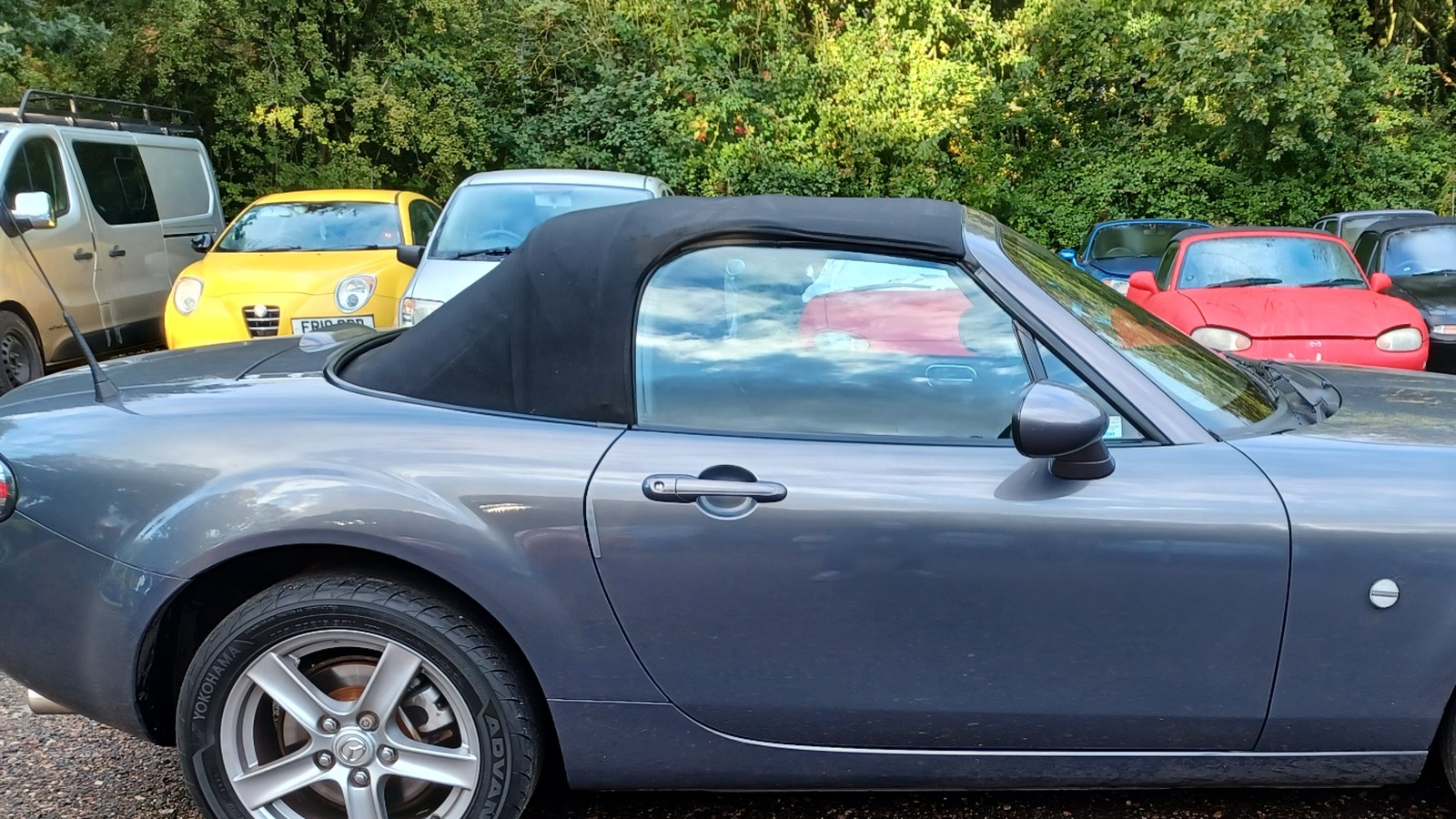

This Mazda MX-5 NC buying guide covers the key things to check before buying a third-generation MX-5, from rust and mechanical condition to roofs, history and the test drive.
The third-generation Mazda MX-5 — usually known as the NC or Mk3 — is one of the most affordable ways into a genuinely enjoyable rear-wheel-drive sports car.
They’re simple enough to maintain at home, practical enough to use regularly and plentiful enough that you don’t need to buy the first one you see.
But the oldest examples are now more than 20 years old, and condition varies enormously. A cheap MX-5 with hidden corrosion, water leaks or neglected maintenance can quickly become more expensive than buying a better car in the first place.
PROJECT MX5 RULE NUMBER ONE
Buy on condition first, specification second.
MX-5 NC at a glance
Generation
Third-generation MX-5 (NC / Mk3)
UK model years
2005-2015
Engines
1.8L and 2.0L petrol
Drive
Rear-wheel drive
Roof options
Manual soft top or powered retractable hard top (PRHT)
Best advice
Condition matters more than specification
In this guide…
Which NC should you buy?
The NC was produced from 2005 to 2015 and went through two major facelifts during its life. You’ll commonly see the three versions described as NC1, NC2 and NC3 — or Mk3.0, Mk3.5 and Mk3.75 in the UK.
NC1 / Mk3.0
2005-2008
The original NC. Easily recognised by its softer front bumper and oval-shaped grille. Early cars can represent excellent value, but condition is increasingly important as they age.
NC2 / Mk3.5
2009-2012
The first facelift brought a sharper front end, interior revisions and mechanical updates. Often a good compromise between price and age.
NC3 / Mk3.75
2013-2015
The final version of the NC, with another styling update and further refinements. Usually commands the highest prices.
Don’t automatically assume newer is better.
A well-maintained NC1 with a solid body is a much better buy than a neglected NC3 with corrosion underneath.
READ THE FULL NC1 vs NC2 vs NC3 GUIDE →
1.8 Litre vs 2.0 Litre
UK buyers will mainly come across two petrol engines in the NC: the 1.8 and the 2.0. Both deliver the same basic MX-5 formula, but they suit slightly different buyers. The important thing is not to dismiss a good 1.8 just because a 2.0 looks better on paper.
1.8 Litre
The 1.8 is the simpler, less powerful option, but it still gives you the lightweight, rear-wheel-drive character that makes the MX-5 fun. It can also be one of the more affordable ways into NC ownership.
Best for:
Buyers who value simplicity, lower purchase price and usable performance over outright pace.
2.0 Litre
The 2.0 offers noticeably stronger performance and was fitted to many of the higher-specification cars. It’s the obvious choice if you want the quicker version or plan to use the car for more enthusiastic driving.
Best for:
Buyers who want more performance and are happy to pay a little more for the right car.
Condition still wins.
A well-maintained 1.8 is a better buy than a tired 2.0. Check oil level, service history and general condition before worrying about engine size.
READ THE FULL 1.8 vs 2.0 GUIDE →
Soft Top vs PRHT
NC buyers can choose between the traditional manually folding fabric roof and Mazda’s Power Retractable Hard Top (PRHT). Both work well, but they suit slightly different types of owner.
Soft Top
The fabric roof is simple, light and very quick to lower manually. It gives the NC the classic roadster feel and has fewer moving parts to worry about.
Best for:
Drivers who want simplicity, lower weight and the most traditional MX-5 experience.
Check:
Fabric condition, seals, rear window area, drains and signs of water ingress.
PRHT
The folding hard top gives better security and refinement with the roof raised while still providing proper open-top motoring at the press of a switch.
Best for:
Owners who use the car year-round, park outside regularly or want a quieter cabin.
Check:
Operate the roof several times and watch for hesitation, warning lights, unusual noises or poor alignment.
Neither roof is automatically better.
Choose the one that suits how you’ll actually use the car — and buy on condition.
READ THE FULL SOFT TOP vs PRHT GUIDE →
Rust: the big one
Mechanical faults can usually be repaired relatively predictably. Structural corrosion is different. A car that looks tidy from above can still hide expensive rust underneath, so this is one area where you should inspect carefully rather than relying on shiny paintwork or a fresh MOT.
DON’T JUDGE AN NC BY THE BODYWORK ALONE
Get underneath the car. Fresh paint, polished wheels and a clean interior tell you very little about the condition of the structure underneath.
REAR SILLS & ARCHES
Check around the rear wheel arches and the ends of the sills for bubbling paint, swelling or previous repairs.
CHASSIS & UNDERSIDE
Inspect the underside carefully for heavy corrosion, damaged seams and areas that have already required welding.
SUSPENSION MOUNTING BARS
Look closely around structural mounting points and nearby metalwork. Surface rust and serious corrosion are very different things.
FRESH UNDERSEAL
Underseal can be good preventative maintenance — but a freshly coated underside can also hide what’s beneath it. Ask what preparation was carried out first.
Warning signs
- bubbling around the rear arches or sill ends
- crusty seams or flaking metal underneath
- obvious patch repairs or poor-quality welding
- mismatched paint around repaired areas
- very fresh underseal with no photographs or invoices
- repeated corrosion advisories in the MOT history
If you’re unsure, get it inspected.
Paying for a proper pre-purchase inspection is cheap compared with repairing structural corrosion after you’ve bought the car.
READ THE FULL MX-5 NC RUST GUIDE →
Roof Drains & Water Leaks
Water inside an MX-5 shouldn’t simply be accepted as part of convertible ownership. On soft-top NCs, blocked roof drains are a common cause of damp interiors, while leaks around the windscreen scuttle can also allow water into the footwells.
BEHIND THE SEATS
Check the carpets and trim behind both seats for dampness, water staining or a musty smell.
FRONT FOOTWELLS
Wet carpets at the front can point towards leaking scuttle seals as well as roof-related water ingress.
ROOF DRAINS
Make sure water can drain freely and look for leaves, dirt or debris around the roof-storage area.
SIGNS OF OLD LEAKS
Condensation, mould, stained trim or recently dried carpets can suggest the car has been wet before.
DON’T JUST FIND THE LEAK — LOOK FOR THE DAMAGE
Water can remain trapped beneath carpets long after the surface feels dry. Check for corrosion, mould and evidence of previous electrical problems.
Don’t forget behind the seats
Move both seats forward and physically check the carpets rather than relying on appearance alone. If the interior is damp, find out where the water entered and how long the problem has existed.
READ THE FULL MX-5 NC ROOF DRAINS & WATER LEAKS GUIDE →
Engine Checks
Both the 1.8 and 2.0 NC engines are generally strong when they’ve been maintained properly, but neglect can become expensive. Whenever possible, inspect the car from cold rather than after the seller has already warmed it up.
COLD START
The engine should start promptly and settle into a steady idle. Listen for persistent rattles, knocks or other unusual mechanical noises.
OIL LEVEL
Check the dipstick before starting the engine. A very low oil level is a warning sign about how closely the car has been maintained.
EXHAUST SMOKE
Watch the exhaust when the engine starts and under acceleration. Persistent blue smoke deserves further investigation.
COOLANT & LEAKS
Check the coolant level and condition, then look around the engine bay and underneath the car for obvious signs of oil or coolant leakage.
Service history matters
A clean engine bay is nice to see, but invoices and evidence of regular servicing tell you far more. Look for sensible oil-change intervals, documented repairs and signs that problems were dealt with rather than ignored.
DON’T BE DISTRACTED BY A WARM ENGINE
If the engine is already hot when you arrive, ask why. Some noises and starting problems are much easier to spot from cold.
During the test drive
Let the engine warm fully before using higher revs. It should pull cleanly through the rev range without hesitation, excessive smoke, warning lights or unexpected noises.
READ THE FULL MX-5 NC ENGINE BUYING CHECKS GUIDE →
Gearbox & Clutch
The NC’s manual gearboxes are generally robust, but they should still feel precise and consistent once warm. The clutch should engage smoothly without slipping, juddering or making unusual noises.
SHIFT QUALITY
Work through every gear. A little stiffness when cold isn’t unusual, but the shift should become smoother as the gearbox warms up.
CLUTCH BITE
The clutch should engage progressively and predictably. A very high bite point, slipping or juddering can indicate wear.
NOISES
Listen for whining, grinding or clunking from the transmission, particularly when accelerating, lifting off or changing gear.
REVERSE & FIRST GEARS
Make sure first and reverse engage cleanly. Difficulty selecting either can point to clutch or linkage issues.
During the test drive
Use every gear and try a few different speeds and loads. Accelerate firmly in a higher gear and watch for engine revs rising without a matching increase in road speed — a classic sign of clutch slip.
DON’T JUDGE THE GEARBOX IN THE FIRST 30 SECONDS
NC gearboxes can feel more notchy when cold. What matters is whether the shift improves as the transmission warms up.
Check the drivetrain as a whole
Pay attention to noises from the differential and propshaft area too. Excessive backlash, vibration or unusual noises under load are worth investigating before you buy.
READ THE FULL MX-5 NC GEARBOX & CLUTCH BUYING GUIDE →
Suspension, Brakes & Tyres
The MX-5’s handling is a big part of its appeal, so tired suspension, poor tyres or neglected brakes can spoil an otherwise good car. None of these necessarily makes an NC a bad buy, but they can add significantly to the cost of putting it right.
SUSPENSION
Check that the car sits level and inspect the springs and dampers where possible. Listen for knocks or clunks over rough roads that could indicate worn or damaged components.
BRAKES
Inspect the condition of the discs and pads and look for heavy corrosion or uneven wear. During the test drive, the car should stop cleanly and in a straight line without vibration through the pedal or steering wheel.
TYRES
Check tread depth, age and condition across all four tyres. Uneven wear may point towards poor alignment or worn suspension components.
WHEELS & ALIGNMENT
Look for damaged or badly refurbished wheels and check that the steering wheel sits straight when driving on a level road. The car shouldn’t constantly pull to one side.
Don’t ignore the tyres
Four decent, matching tyres are a good sign that someone has considered how the car drives as a whole. A mixture of old or very cheap tyres isn’t automatically a reason to walk away, but it should make you look more closely at how the rest of the car has been maintained.
LISTEN ON ROUGHER ROADS
A five-minute drive on smooth tarmac can hide suspension problems. Include a few bumps and uneven surfaces in the test drive and listen for knocks, rattles or movement that doesn’t feel right.
During the test drive
The steering should feel direct and predictable, with the car tracking cleanly without wandering. Brake progressively from a sensible speed and check for pulling, vibration or unusual noises.
READ THE FULL MX-5 NC SUSPENSION & BRAKE CHECKS GUIDE →
Bodywork & Accident Repairs
Cosmetic marks are normal on an older MX-5, but poor accident repairs or hidden structural damage are a different matter. Take your time looking along the panels and checking whether the car’s condition matches the seller’s story.
PANEL GAPS
Check the gaps around the bonnet, doors, boot and bumpers. Uneven gaps can indicate previous accident repairs or poorly refitted panels.
PAINT FINISH
Look along the sides of the car rather than straight at them. Differences in reflections, colour or texture can reveal previous paintwork.
OVERSPRAY & MASKING
Inspect rubber seals, trim edges and inside door shuts for overspray or paint lines that suggest a quick repair.
FRONT & REAR DAMAGE
Check the nose, bumper mounts and rear bodywork for cracks, distortion or repairs that don’t look factory-finished.
Previous repairs aren’t automatically bad
A properly repaired car can still be a good buy. What matters is the quality of the work, whether the repair was structural or cosmetic, and whether there is evidence to support what was done.
CHECK THE CAR’S HISTORY BEFORE YOU TRAVEL
A vehicle history report can help uncover recorded accident damage, mileage discrepancies, theft records and other background information before you spend time travelling to view the car.

CHECK VEHICLE HISTORY WITH carVertical →
Affiliate link — Project MX5 may receive a commission at no extra cost to you.
MISMATCHED PAINT DESERVES A CLOSER LOOK
Different shades between adjacent panels don’t prove serious damage, but they are a good reason to ask questions and inspect the repair area more carefully.
Check the details
Look at the condition of headlights, number-plate mounts, mirrors, wheel arches and lower bumper edges. Small inconsistencies can sometimes tell you more than a freshly polished bonnet.
READ THE FULL MX-5 NC BODYWORK & ACCIDENT REPAIR GUIDE →
Interior & Electrics
Most interior faults on an NC aren’t deal-breakers, but they’re useful clues to how the car has been treated. A tidy cabin, working electrics and dry carpets usually suggest a car that has been looked after rather than simply cleaned for sale.
WINDOWS & MIRRORS
Check both electric windows operate smoothly and make sure the mirrors adjust correctly. Slow or hesitant operation is worth noting.
HEATING & AIR-CON
Run the heater through its full temperature range and test the air-conditioning. Weak cooling may simply need attention, but factor it into the price.
WARNING LIGHTS
With the ignition on, check that the expected warning lights illuminate — then make sure they go out correctly once the engine starts.
SEATS & INTERIOR TRIM
Inspect seat bolsters, carpets, door trims and switches for excessive wear, damage or signs that the interior has been repeatedly wet.
Check everything
Try every switch you can find: central locking, stereo, heated seats where fitted, interior lights, 12V socket and any aftermarket equipment. Small electrical faults can be irritating and sometimes point to previous water ingress or poor modifications.
DON’T IGNORE DAMP CARPETS
Water under the seats or behind the trim can affect wiring and electrical connections. If the interior smells musty or the carpets feel damp, investigate the cause rather than assuming it’s harmless.
Look for modifications
Aftermarket stereos, alarms, lighting and other electrical accessories aren’t automatically a problem, but poor wiring is. Look for exposed joins, loose cables or obvious DIY alterations behind accessible trim.
READ THE FULL MX-5 NC INTERIOR & ELECTRICAL CHECKS GUIDE →
History & Paperwork
Paperwork won’t tell you everything about an MX-5, but it can reveal how the car has been maintained and whether the seller’s story makes sense. Check the history before travelling to view the car, then compare it with what you find during the inspection.
MOT HISTORY
Check previous MOT results for recurring advisories, particularly corrosion, tyres, brakes and suspension. Repeated faults can reveal problems that have been postponed rather than properly repaired.
SERVICE RECORDS
Look for invoices and receipts as well as stamps in a service book. Evidence of regular oil changes and preventative maintenance is more useful than a freshly cleaned engine bay.
PREVIOUS REPAIRS
Ask about welding, accident damage, replacement panels and significant mechanical work. Good repairs aren’t a problem — unexplained ones deserve closer inspection.
VIN & REGISTRATION
Make sure the VIN on the car matches the paperwork and registration details. Any discrepancy should be resolved before money changes hands.
Check the vehicle before you travel
Before making a long journey to view an MX-5, check as much of its history as you reasonably can. MOT records are a useful starting point, while a vehicle-history report may provide additional information about the car’s past.
CHECK THE CAR’S HISTORY
A carVertical vehicle-history report can provide additional background information before you travel to view a car, including available records relating to mileage, damage and other vehicle-history data.
CHECK VEHICLE HISTORY WITH carVertical →
Affiliate link — Project MX5 may receive a commission at no additional cost to you.
Look for consistency
The registration, VIN, MOT history, service invoices, mileage and seller’s description should broadly tell the same story. One missing receipt isn’t unusual on an older car; several unexplained inconsistencies are more concerning.
DON’T RELY ON A SERVICE BOOK ALONE
A collection of dated invoices often tells you far more about a car’s life than a row of stamps. Look for evidence of what work was actually carried out.
Questions worth asking
- How long have you owned the car?
- Why are you selling it?
- Has it ever had structural rust repairs?
- Has it been involved in an accident?
- Does it use or lose any oil or coolant?
- Has the roof ever leaked?
- What work has been carried out recently?
- Are there any faults you know about?
READ THE FULL MX-5 NC HISTORY & PAPERWORK GUIDE →
The Test Drive
A proper test drive should tell you how the car feels as a whole, not just whether it starts and moves. Try to include town driving, rougher surfaces and a faster road so you can check the engine, gearbox, steering, suspension and brakes under different conditions.
ENGINE & THROTTLE
Let the engine warm fully, then check that it pulls cleanly through the rev range without hesitation, excessive smoke or warning lights.
GEARBOX & CLUTCH
Use every gear and pay attention to shift quality as the gearbox warms up. Check for clutch slip, judder or difficulty selecting first and reverse.
STEERING & SUSPENSION
The car should track straight and feel predictable. Listen for knocks or rattles over uneven roads and watch for wandering or pulling.
BRAKES
Brake progressively from a sensible speed. The car should stop straight without vibration through the pedal or steering wheel.
Don’t make it a five-minute lap
A short drive around the block can hide a lot. Give the car enough time to warm up properly and try a mixture of roads so you can judge how it behaves in real use.
TURN THE STEREO OFF
Listen to the car. Mechanical noises, drivetrain whine, suspension knocks and brake vibration are much easier to notice without music playing.
After the drive
Leave the engine idling for a minute and take another look around the car. Check underneath for fresh leaks, listen for unusual noises and make sure no warning lights have appeared.
- Does the engine idle smoothly?
- Does the temperature stay stable?
- Does the gearbox feel better once warm?
- Does the clutch bite cleanly?
- Does the steering feel straight and consistent?
- Are there any new noises?
- Can you see or smell any fresh oil or coolant?
READ THE FULL MX-5 NC TEST DRIVE GUIDE →
When to Walk Away
No twenty-year-old MX-5 is going to be perfect. Stone chips, worn trim and a few age-related jobs are normal. What matters is whether the car has a manageable list of faults — or a collection of problems that suggest neglect, poor repairs or potentially expensive work ahead.
STRUCTURAL RUST
Heavy corrosion around structural areas, poor welding or metal that has already lost strength should make you very cautious.
ENGINE PROBLEMS
Persistent smoke, heavy knocking, unexplained coolant loss or obvious oil starvation can quickly turn a cheap car into an expensive one.
POOR REPAIRS
Bad bodywork, questionable wiring, rushed welding or unexplained modifications can indicate a car that has been repaired to a price rather than properly.
MANY SMALL PROBLEMS
One worn tyre is manageable. Worn tyres, damp carpets, warning lights, clutch slip and suspension knocks together suggest a car that may have been neglected for some time.
DON’T TALK YOURSELF INTO IT
If the inspection keeps uncovering reasons to worry, listen to them. There are plenty of NCs around, and walking away is cheaper than inheriting someone else’s problems.
A few faults can still be fine
A car needing brakes, tyres or cosmetic attention can still be a good buy if the price reflects the work required and the structure, engine and drivetrain are fundamentally sound.
Trust the overall picture
The best cars tend to tell a consistent story: sensible history, decent maintenance, honest condition and a seller who can explain what has been done. The more contradictions you find, the more cautious you should become.
Ready to view a car?
Take the Project MX5 NC Buyer’s Checklist with you and work through the important checks before you commit.
DOWNLOAD THE FREE MX-5 NC BUYER’S CHECKLIST →
Related: MX-5 NC Rust Guide →
Related: MX-5 NC Roof Drains & Water Leaks →